
Blog
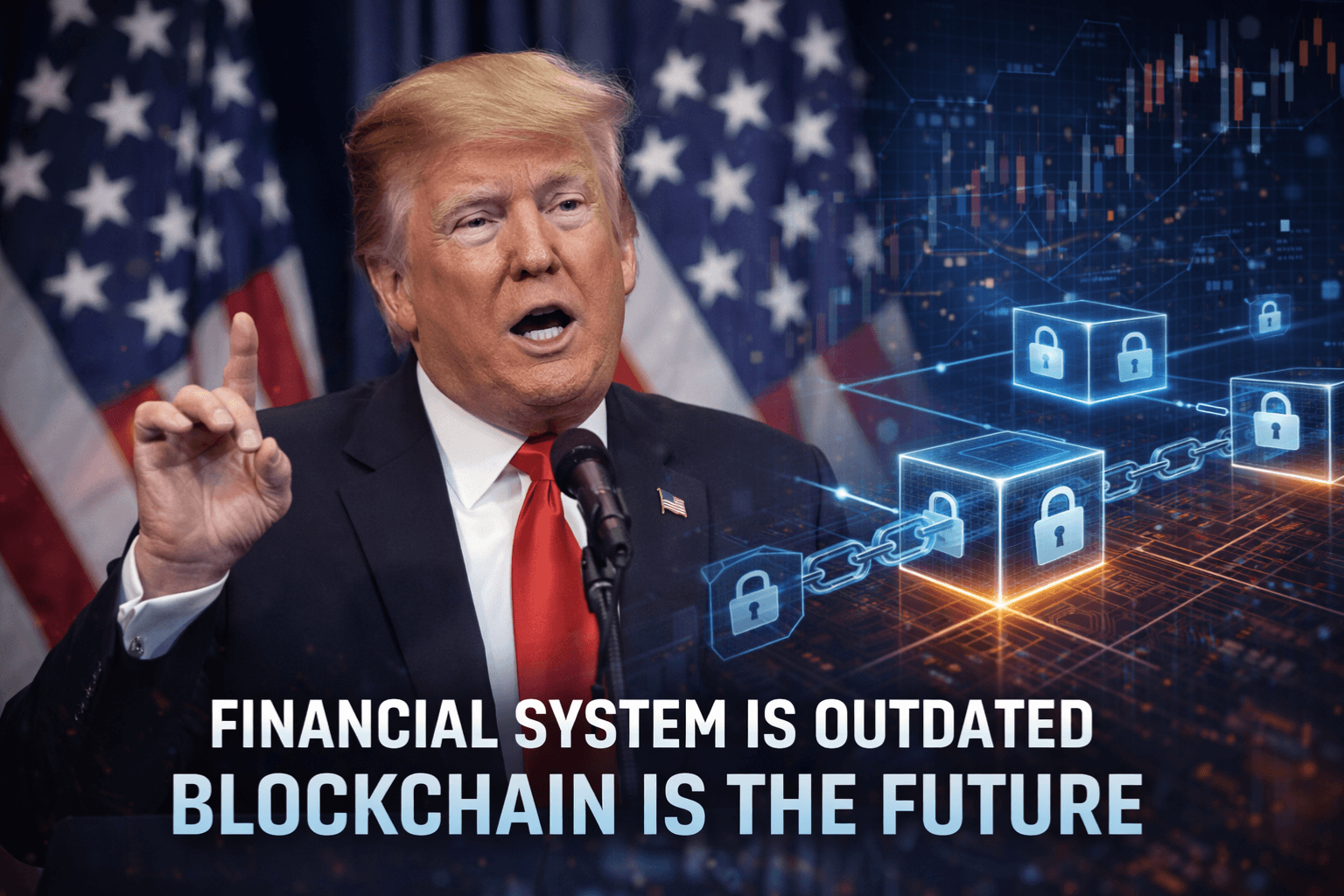
When Politicians Start Talking About Blockchain, the System Is Already Changing
Sometimes, the statement itself is not the most important part.
What matters is that it is being said at all.
When a figure like Donald Trump is associated with discussions around blockchain and the future of the financial system, it does not necessarily mean a new global architecture is about to be implemented tomorrow.
But it does signal something deeper:
the technology is no longer peripheral.
From skepticism to strategic conversation
Just a few years ago, the political tone around crypto was clear — skeptical, distant, sometimes openly hostile.
Today, the conversation is shifting.
It is no longer about whether blockchain has a place.
It is about where and how it will be integrated.
And that is a significant change.
“The old system is outdated” — what does that really mean?
Let’s remove the slogans and translate this into market language.
The traditional financial system:
- relies on intermediaries
- operates through layers of trust
- is slow in cross-border settlement
- is heavily influenced by political structures
This does not mean it will disappear.
It means it has structural limitations.
And when those limitations become visible to a broader set of participants, the search for alternatives begins.
Blockchain is not ideology. It is a tool.
This is where many people get it wrong.
Blockchain is not a political position.
It is not even necessarily tied to cryptocurrencies.
It is simply:
- a decentralized ledger
- a settlement mechanism
- an infrastructure for transferring value
And when viewed through this lens, its growing relevance becomes obvious.
Not because it is trendy.
But because it solves real inefficiencies.
Why politicians are starting to pay attention
Politics follows economics — not the other way around.
When:
- institutional capital enters digital assets
- banks begin experimenting with blockchain settlement
- governments explore digital currencies
- markets demand faster execution and transparency
political attention follows.
Not because politicians are leading the transformation.
But because they can no longer ignore it.
The real transition will not be loud
If anyone expects a day when the system will announce:
“From tomorrow, everything runs on blockchain” — that will not happen.
The transition will be gradual:
- first at the settlement layer
- then through asset tokenization
- followed by integration into banking infrastructure
Only later will it become obvious in hindsight.
The key signal: when something becomes inevitable
The real signal is not in the statement itself.
The signal is that the conversation is happening at a level where it previously did not exist.
When a technology moves from:
- niche discussion
- to regulatory focus
- to political discourse
it is already in the process of integration.
This is not a revolution. It is an infrastructure upgrade
Financial systems do not collapse overnight and get replaced instantly.
They evolve.
Slowly. Quietly. Almost invisibly.
Until one day, the new version simply becomes the standard.