
Blog
Why energy is the nervous system of the global economy
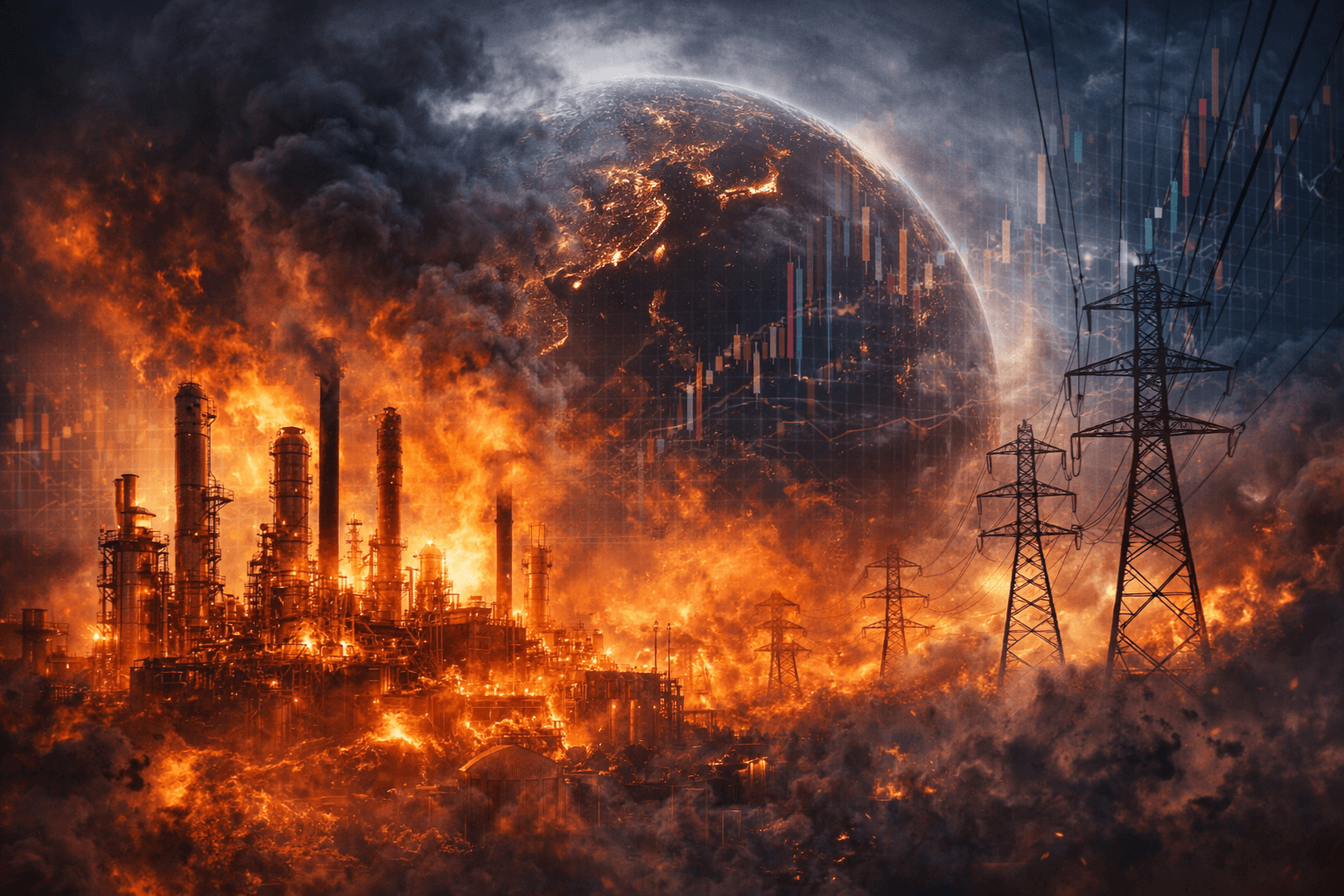
Oil is not just a commodity. It is transportation, manufacturing, logistics, aviation, heavy industry.
Refinery disruptions are not local events. They ripple through global supply chains.
When a large share of export capacity from one of the world’s major energy producers is disrupted within a short period, markets begin pricing risk.
And risk in energy almost always translates into:
- higher prices
- inflationary pressure
- stress on central bank policy
Energy infrastructure as a target — not new, but more consequential
Historically, energy infrastructure has always been a strategic military target. Refineries, pipelines, ports — they have long been part of wartime logic.
What is different today is global interconnection.
In a highly globalized financial system, any major disruption has second-order effects across continents.
This does not automatically imply coordinated global planning.
It implies systemic sensitivity.
“Global reset” — structural transition or psychological reaction?
The phrase “global reset” tends to surface whenever instability rises.
But we must distinguish between:
- structural transformation
- and centralized conspiracy
History shows that major financial shifts occur because of accumulated shocks, not because of coordinated collapse.
World War I disrupted the gold standard.
World War II reshaped the monetary order through Bretton Woods.
The 2008 crisis led to unprecedented monetary expansion.
These were systemic reactions to crisis — not centrally scripted economic destruction.
When energy becomes a geopolitical weapon
Energy today is more than an economic asset. It is a geopolitical lever.
Attacks on infrastructure:
- increase volatility
- intensify inflation expectations
- complicate monetary policy
- elevate systemic uncertainty
But economies do not automatically collapse. They adapt.
What we are actually witnessing
We are observing a world where:
- supply chains are more fragile
- military conflicts are technologically advanced
- energy security is central to policy
- capital reacts at unprecedented speed
This does not confirm a deliberate plan to crash the global economy.
It reflects heightened systemic risk in an interconnected world.
The market perspective
For investors, the key question is not whether there is a coordinated plan.
The relevant questions are:
- How does this affect inflation?
- How will central banks respond?
- Will rate cuts be delayed?
- Will this boost demand for gold, energy stocks, or crypto assets?
Energy shocks often lead to:
- strong performance in commodities
- pressure on growth-sensitive equities
- increased demand for hedging assets
The broader takeaway
The concept of a “global reset” is often an emotional interpretation of complex developments.
The reality is more structural:
The global economy is deeply interconnected.
Energy disruptions matter.
Markets adjust.
Systemic transitions occur gradually, through adaptation and policy response — not through orchestrated collapse.